Adventures in Wigland | Cup of Jo
My mom shows up at my front door in the middle of the afternoon, unannounced.
“I’m ready for a wig,” she declares, walking right past me and pulling off her coat. I have asked her again and again to warn me before she shows up, but she never has, not once. Then again, I keep letting her in.
“A wig!” I reply, cautiously delighted, and a little confused. She’s been bald as an egg from chemo for months; I wonder what has shifted. But I’m thrilled with this clear directive — something we can actually do for her, for once — that I close my laptop and offer to make us lunch.
She calls out wig facts from my breakfast nook, as I take a bag of Trader Joe’s gnocchi from the freezer and dump it in a pan. “So, there’s fake hair and real hair,” she says. “Fake-hair wigs last six months on average. Real hair is more expensive, but it lasts for over a year.”
“How much are we talking about?”
“A few hundred versus a thousand, I think.” She looks at me and I look back, spatula in the air, trying to keep my face blank — to sidestep the subject of “lasting,” and months and years. Since her cancer diagnosis, she’s had a full-day surgery, two hospital stays, genetic sequencing, and six rounds of chemo. Each milestone has led to more bad news. The five-year survival rate for leiomyosarcoma is 14 percent, I know that by heart. Everything I read says she has nine to 15 months to live. (She will be gone in less than a year, but we don’t know that yet.) “Someone has to be in that 14 percent,” she tells me, whenever I suggest she start withdrawing her retirement early. So, we eat lunch and make plans to check out a wig store this evening and then see a movie.
Arriving at Wigland, we creep around for 10 minutes, waiting for the next free staffer. We walk shyly down the rows of disembodied display heads, exchanging amused glances but afraid to touch anything. The low ceilings and bad lighting, the dead-eyed stares of the wig mannequins — it all feels weighted with meaning, and I fight the urge to flee.
When it’s our turn to be helped, Brian, the proprietor, is careful with us, his approach sidelong. “How much do you know about wigs?” he asks with tender curiosity. “Absolutely nothing!” I answer, too eager. Brian doesn’t miss a beat. First, he tells us about synthetic wigs, which, he stresses, cannot be exposed to heat. You have to be careful reaching into the oven, or the bangs will frizzle. I laugh nervously, then worry it might be inappropriate in this setting. Wigs are so close to a joke, or a gag, but also, crucially, not at all.
Blessedly, my amusement only seems to encourage Brian. He grins and reminds us to be mindful of the dishwasher, too — the hot steam. I’m amazed, my dread giving way to admiration. The things people — wig people — go through, while people like me remain blithely clueless. “Oh, yes, and you want to steer clear of barbecues,” he adds, a twinkle in his eye. I want to say we’re experiencing camaraderie. Isn’t the world funny? Isn’t being human humiliating? Ha!
Finally, my mom sits to be fitted, and now Brian really shines. He puts on the wig cap with such evident care: “Does that feel okay? How is your scalp doing with the treatments? I know it can be extra sensitive.”
Mom lights up under his attentive gaze. “It looks like a fishnet stocking!” she says of the wig cap, embracing the absurdity. “It sure does.” He adjusts her. “One positive in all this is that you have a great head for wigs.” Mom replies: “Really?” as flattered and disbelieving as a child.
Brian wants a sense of what she looked like, before. Lately I have resisted looking back at old photos, where she looks so much younger and full of life, but now I jump at the opportunity to scroll back through my phone. There she is: medium-brown hair to her shoulders, reddish-blonde highlights framing her face. She used a curling iron almost every day, for as long as I could remember. I proudly hand Brian my phone — my beautiful mother! — and he shows no sadness or regret when he sees her; just squints at her hair and then rushes off, a man on a mission.
He returns with a stack of wigs, referring to them as “her” and “she,” which brings me joy each time. They seem alive in his hands when he slides them out of their boxes — an array of shoulder-length brunettes, graying auburns, and various gradients of salt-and-pepper. They look like my mother to me — like some long-lost body part. Like maybe her hair was here in Wigland the whole time?
The first he presents to us is a chestnut bob with bangs. She looks both not-quite-right and so much more right than she did a second ago. She is given back to me, briefly. I laugh gleefully, and take so many photos. The next one is too gray — grayer than she was. My mom laughs in horror, saying she looks like her mother. She does look exactly like Gram, who died just a few years ago at 95, an age that, barring a miracle, my mother will never see. She doesn’t want to look like her mom, but I want her to. I want her to be gray, to have softened, for time to have elapsed, for us to no longer be in this moment. I want her to age, to live. I want to have a mom who has made it to the phase of life where her hair is almost completely white.
Brian has another one, but he’s worried we won’t like it. “She’s a bit of a mess,” he tells us. “I’m a bit of a mess,” Mom laughs. She’s shoulder-length with a swoopy bang, and the shade is close to what mom’s once was: a tasteful blend of grey and dirty blonde. Pretty perfect, we agree. The one, probably.
At Brian’s urging, we go to the window to see her in natural light. I take a photo of both of us, smiling. We are grinning actually. I feel immense relief. We look so normal. Maybe she’s right, maybe her doctor and I have written her off prematurely, given up too soon. Why am I unable to live in the hopeful place my mother does? Where a 14 percent chance of being alive in five years feels significant, worth trying for? Where being wrong isn’t the worst thing that can happen to you?
We take more photos. Mom never resists taking pictures with me now, which I take as a bad sign. Like we both know there are only so many left. Brian sits her back in the chair and explains all the tweaks we can make to the wig. Thinning it here and there, shortening the back. No need for a hairdresser, Brian says, smiling. He can do it himself, if we trust him.
“We trust you!” I blurt, without checking with my mom. Of course we trust him, or I do. I know that Brian wants more for my mother than she does for herself. He will make it better, this wig we love already, that is $220. He can have her back to us in just a few days, he says. I want to be like him, to see people at their most vulnerable and know that I can improve their lives — not interpersonally, but with my own very specific skill.
Back the car, I do a three-point turn, directing us toward the movie theater. By the time I shift from reverse to drive, I’m jubilant. “I didn’t think we’d actually buy one today!” I say, looking over at Mom, now fitting her wool beanie back on her bald head. “Me neither!” she answers. It feels like we’re two teenagers who just got our ears pierced, or something equally wholesome and indulgent. I wonder what else we can do — how else we can chase this feeling, before it’s no longer available to us.
Meaghan O’Connell is freelance writer and editor and the author of the 2018 memoir And Now We Have Everything: On Motherhood Before I Was Ready. You can find her work in New York Magazine, Romper, The New York Times, and her newsletter, What The Living Do.
P.S. The Dead Dad Club, and nine life lessons I learned after my cancer diagnosis.
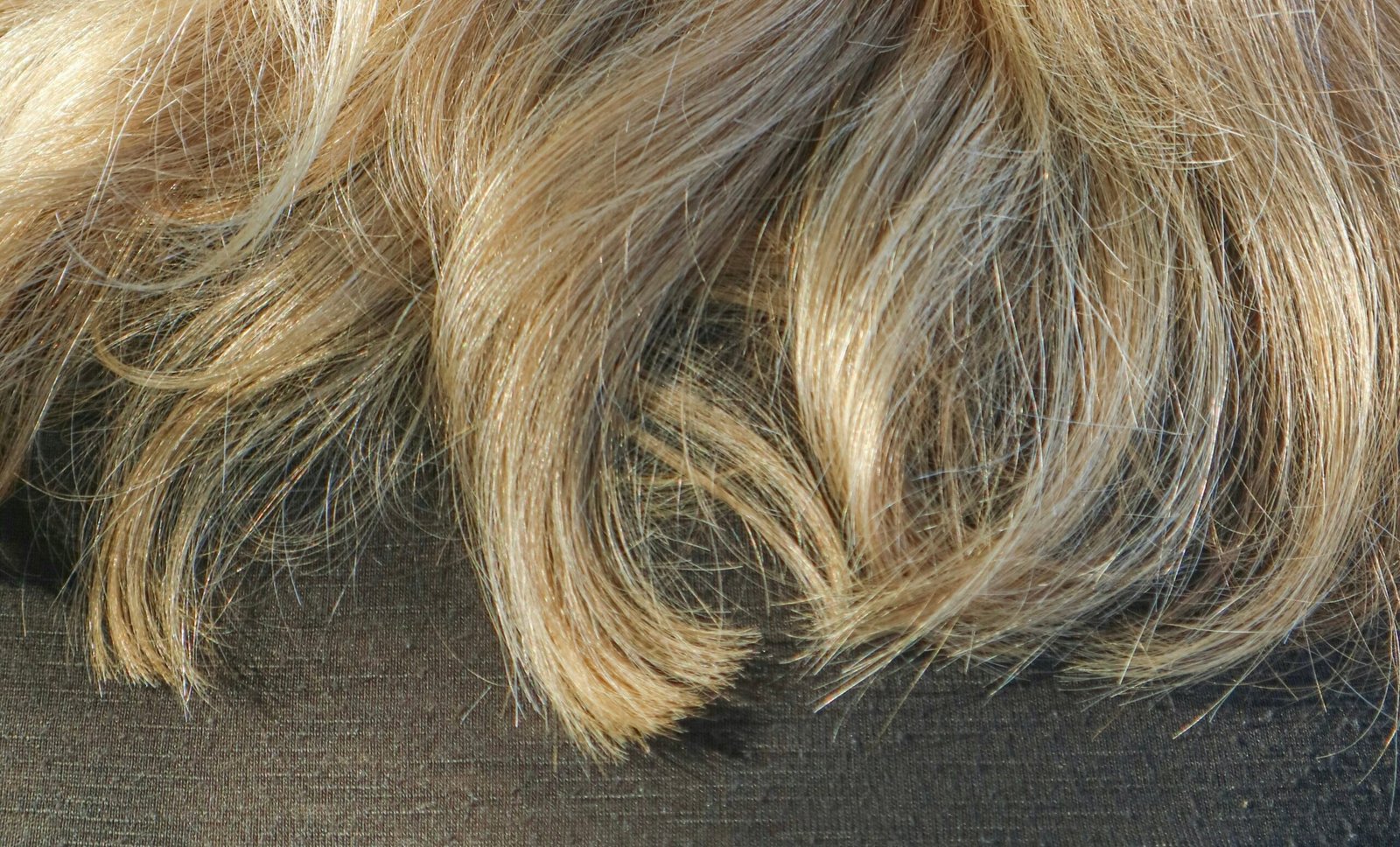
(Top photo by Jerusha/Unsplash.)