What I Won’t Tell My Friend About Dementia

“My dad got diagnosed on Tuesday, I’m scared.” My friend’s text comes in the middle of the night.
I sit on the toilet at 3 a.m., considering how to welcome her to the most awful club.
My own mother was diagnosed with dementia a few weeks into COVID, shortly after my husband and I had asked her and my dad to move nearby and help with the kids, drowning as we were in online kindergarten. My mom had been a little “off” for years, and then forgetful, then increasingly paranoid. But she’d always been in love with the grandkids and our family. It was both a devastating surprise of a diagnosis, and not.
Now, years into this experience, the texts come regularly when friends’ parents are diagnosed. Every time I pause. What can I say that will help? What can I share of my experience that isn’t just the pain, the pain, the pain? There are so many things I want to tell her, and so many that I feel I can’t.
I lie awake feeling the chasm between myself now and myself the moment of my mom’s diagnosis, trying to find rocks to stand on in this river — something solid I can share with my friend, something that might steady her as the current pulls.
I’ll tell her what came before the diagnosis, because I know my friend’s loss has already started. The months or years before a diagnosis are their own kind of hell, not knowing what is happening. Questioning one’s own mother — wondering if she’s aging or sick or just being difficult — is a loss of its own, even before doctors are involved.
I’ll tell her about my mom showing up when my daughter was born, paranoid that our house had bed bugs despite no evidence, no bites. I took my newborn to the library when she was two days old so my husband and dad could inspect everything. I felt angry, abandoned, confused — I’d just given birth, but she was the one acting crazy. Now I know she wasn’t crazy, she was sick.
I’ll tell my friend that I hope now she is less lonely. My mom’s diagnosis at least gave a name to the pain I had been feeling of losing someone I loved, and it allowed me to talk about it more openly with friends. While there was so much grief in her diagnosis, there was also a clearer way to understand what my family had been moving through.
Along with the diagnosis came endless, impossible decisions. We spent a long time terrified of moving my mom into a care facility. She was the matriarch of our family, deeply in love with my dad and her garden, and it felt dehumanizing to take her away from what she knew. But she was wandering alone into the snow, waking up in the middle of the night to unplug every single appliance in the house, convinced the computer was going to catch fire. My dad wasn’t sleeping. My siblings and I became just as worried about his health as our mom’s.
There was a precise pain I felt the last time my mom was in my house — knowing it would be the last time, knowing she didn’t know that. She was joyful. We’d had Christmas with all the grandkids, and she and my dad had worn train conductor hats as the kids collected hot chocolate from them, Polar Express style. But she was also having bizarre mood swings and flashes of anger — at one point she tried to put out the fire with a large butcher knife.
The move to a care facility was clearly the right call. The experience reminded me of my kids starting daycare. It felt like a HUGE deal beforehand, then once she was there it was clear she was so happy. I slept better knowing my dad could rest and my mom was chatting with her new friend Martha over puzzles, and happy singing in the afternoon sessions. I fell in love with the people who cared for her, just as I had with my kids’ daycare teachers.
I’ll also tell my friend some small things that helped. When my mom had first shown signs of dementia, we encouraged her to complete a StoryWorth book. We now read her stories to her, and they calm her. My daughter reads them in her own bed every night. Sometimes that makes me cry. When she was still home and starting to wander, we put an AirTag in her shoe. We try to take care of the staff of her facility with the same care they give her — stocking the staff lounge with snacks, writing thank you cards, offering genuine gratitude.
Lying in bed in the middle of the night, I hold onto these practical steps like a life raft, because the emotional truth is harder. I’ll tell my friend that nothing anyone says will feel good. Things I hear regularly — “this has been so hard for so long” and “it’s happening so fast” — make me want to throw things even though (or, really, because) they are true.
But I’ll tell her what did help: friends who showed up without words. Junk food waiting at my parents’ house before a tough visit. Fancy shower products after I mentioned crying in the shower. Their presence in the hardest moments made me feel less alone.
Mostly, when I talk to my friend, I will tell her I am so sorry.
But I will not tell her everything. I will not tell her what’s coming, because if I had known how painful this was going to be, I would have welcomed the bed bugs, the fire, the knife.
I will not tell her about emergency calls to my therapist; the reports we get from my father’s daily visits; my mom currently being on her thirteenth month of hospice. I will not tell her I now understand the word agony.
Instead, I might tell her this: My mom was a woman who loved to help. A theater director and school librarian, she loved nothing more than telling people what to do. In some ways, helping friends now feels like honoring her — trying to make sense and meaning of her story.
When I’m talking to my friend, I also know I will have the exact same feeling that I still have when sitting by my mom’s bedside — there is so much more to say, so much left unsaid. I will want to say to my friend, as I want to say to my mom, she is doing great. The love won’t go away, it never could. Everything else may go, but as the current pulls us both forward, I can tell her this: the love remains.
And of course, I will tell my friend the one thing I cannot truthfully tell my mom, as much as I want to — she will survive this. She will. Most days, I remember I will too.
Kathleen Donahoe is a writer and poet living in Seattle. She has previously written for Cup of Jo about how she stopped drinking. She is writing her first novel and warmly invites you to follow her free Substack newsletter, A Little Laugh.
P.S. Rebecca Handler’s beautiful essay on loving her father through his final years of Alzheimer’s, and a parenting realization that really moved me.
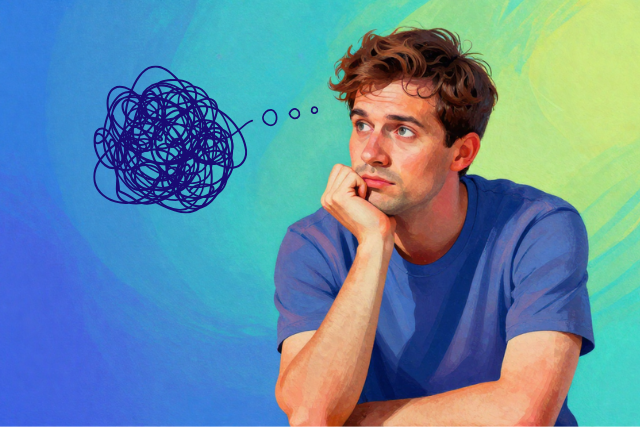
(Photo by Darina Belonogova/Stocksy.)