
The Small Lie I Told My Boss and the Freedom It Bought Me | by Bella Gray UI UX | Oct, 2025
I thought I was protecting my job, but I was actually sacrificing my life, until a quiet act of deception saved me.
I worked at a firm where busy was a badge of honor. If you weren’t visibly stressed, glued to your laptop at 7 PM, or rattling off an impossible calendar of meetings, you weren’t truly committed. We were rewarded not for effective work, but for the appearance of constant sacrifice. For years, I played this exhausting game perfectly. I sent emails at 11 PM to show dedication. I filled my calendar with invented meetings to seem indispensable. And I said yes to every single request, even if my plate was already overflowing, because saying no felt like admitting weakness. The cost of this performance was my entire personal life, my sleep, and my peace of mind.
The breaking point was small, pathetic, and entirely my own fault. I was juggling six major projects, all bleeding into each other, and my anxiety was so high I could barely focus. My boss, a well-meaning but utterly absorbed man, called me into his office to assign a new, high-priority task. It wasn’t urgent in the real world, but in our office culture, it was a “must-do-now” distraction. As he spoke, detailing the aggressive timeline, I felt the panic tighten in my chest. If I said yes, I would have to pull three all-nighters just to keep the other balls in the air. If I said no, I’d face the unspoken accusation of not being a team player, or worse, not being able to handle the pressure.
I stood there, nodding, smiling, and doing the professional dance, but in my mind, a switch flipped. I looked at my boss, who was genuinely excited about this new initiative, and I told the smallest, quietest, most consequential lie of my career.
“That sounds like a fantastic opportunity,” I said, pausing just long enough to sound thoughtful. “The only issue is that I’m completely booked solid until next Tuesday with the Smith presentation deliverables. I can clear my schedule to prioritize this new project completely starting Wednesday morning, but I really can’t touch it before then without risking the Smith timeline.”
It was a lie because the “Smith presentation deliverables” were actually on track, requiring maybe half a day’s work, not four days of isolation. I had inflated the timeline, not to be lazy, but to create a necessary buffer; a wall of air between the expectation and my actual capacity.
My boss’s reaction was instantaneous and entirely unexpected. He didn’t question me. He didn’t press. He simply said, “Ah, okay, well, Smith is obviously the priority. Don’t worry about it until Wednesday then. We can wait for you. Thanks for being transparent about your capacity.”
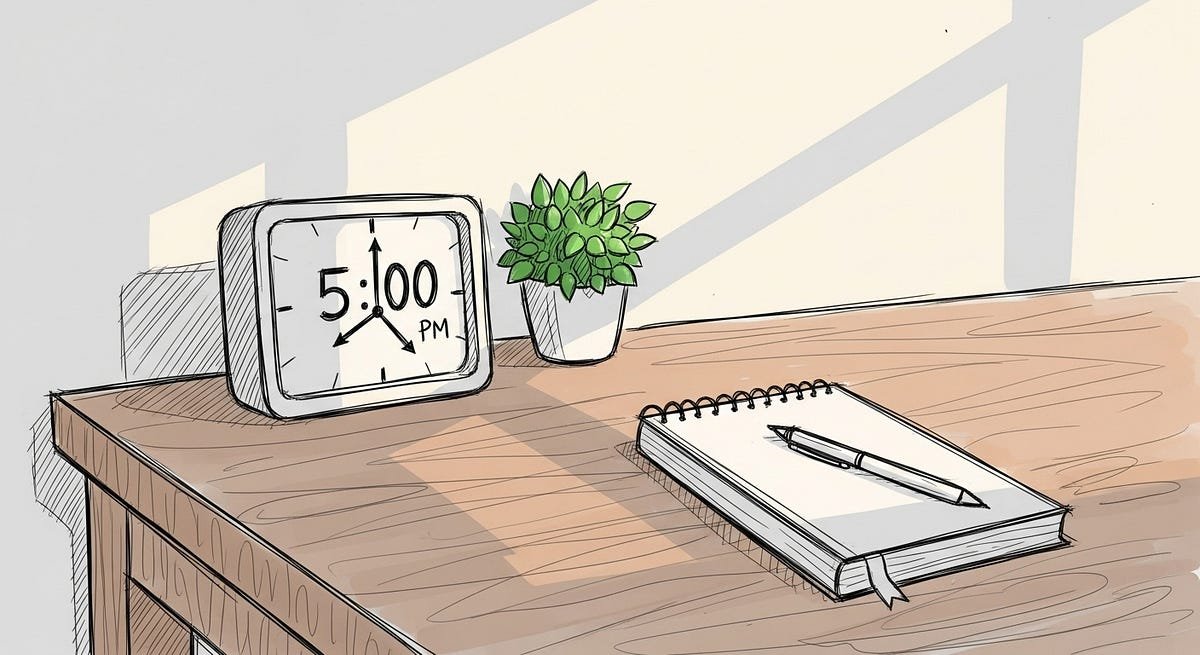
I walked out of that office feeling a bizarre mix of guilt and glorious, sunlit freedom. I had fabricated an obligation, and that simple deception had bought me four days of breathing room. Those four days weren’t a vacation; they were a reset. I didn’t spend them working on the Smith presentation; I spent them calmly and efficiently finishing all the actual urgent tasks that had been causing me stress. I had time to eat lunch away from my desk, go for a walk in the actual sun, and, for the first time in months, leave the office at 5:30 PM.
What this small lie exposed was a profound truth about my workplace, and perhaps about my own self-worth. The firm didn’t value me based on my output; it valued me based on my availability. By creating a fake but believable boundary, I forced them to value my time. They respected the boundary of the “Smith presentation” far more than they respected my simple, honest need for rest. I learned that in the culture of constant busyness, the only way to protect your mental health is to create visible, non-negotiable scarcity around your time.
This wasn’t about shirking responsibility; it was about reclaiming the agency to do my work well and sustainably. That small lie became my new operating principle. I started consistently overestimating timelines slightly. I stopped using my buffer time to take on new tasks and started using it to think, to revise, and to rest. I began to deliver projects consistently early or on time, not rushed and burnt out. The irony is that by being “less available,” I became a better, more reliable, and ultimately, a more valued employee.
The freedom wasn’t just professional; it was personal. I started exercising again. I called my family. I had dinner with my partner without looking at my phone every five minutes. The quality of my life returned, and with it, the quality of my work improved dramatically. I realized that my value wasn’t tied to how exhausted I appeared, but to how effective I was.
The small lie I told my boss wasn’t about avoiding work; it was about enforcing a necessary truth: I am a human being with limits, and respecting those limits is the foundation of sustainable creativity and production. If your work culture demands that you bleed yourself dry, sometimes the only act of self-preservation is to draw a firm, believable line in the sand, even if that line is slightly blurred with truth. Find your own “Smith presentation,” and guard that time fiercely. It is the only way to ensure that your career doesn’t consume your life.