Music and Epilepsy: The Perfect Roommates in a Life Shaped by Seizures | by Guy W. Stoker | Apr, 2026
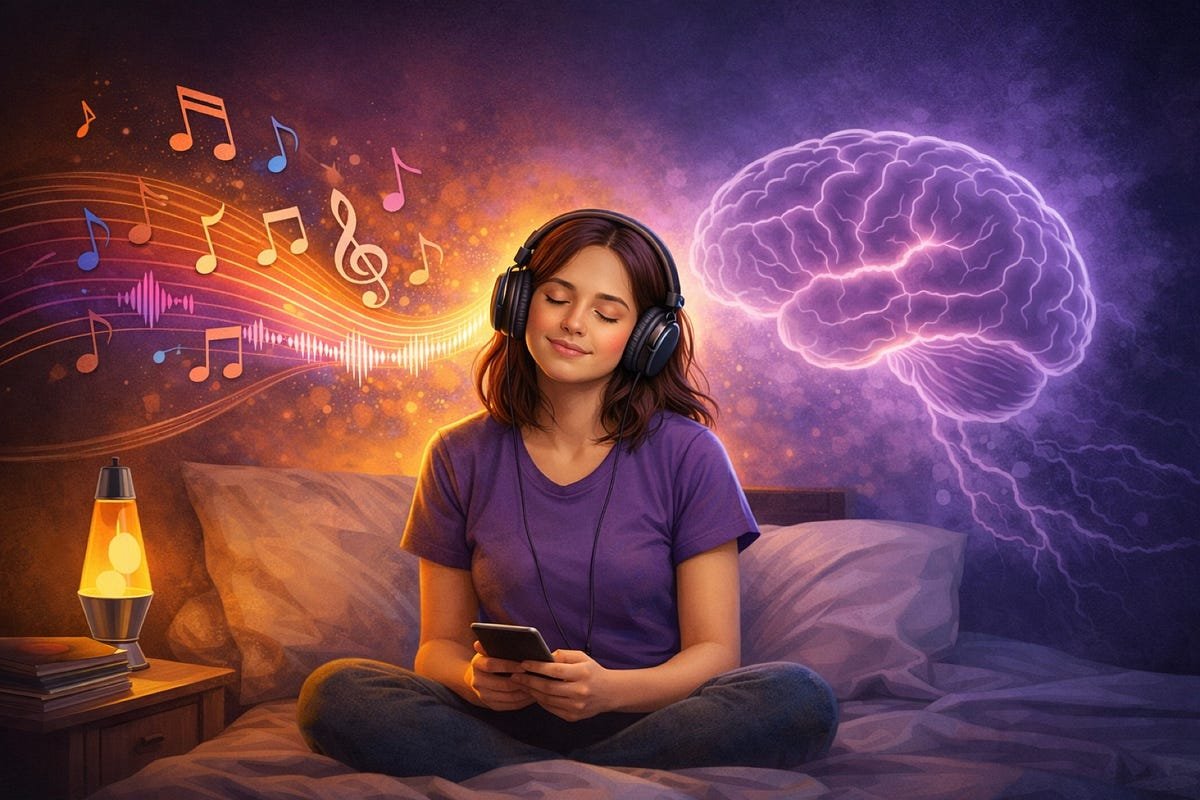
What happens when the brain that creates music is also shaped by epilepsy?
Music and epilepsy might seem like they belong to completely different worlds. One is expressive, creative, and deeply human. The other is neurological, clinical, and often misunderstood.
But for some of us, they exist side by side.
Epilepsy affects tens of millions of people worldwide. It is not a single experience, but a spectrum. Some seizures are visible and dramatic. Others are subtle and can pass almost unnoticed. A brief pause. A flicker of the eyes. A small, repetitive movement.
For those who live alone, particularly if seizures occur during sleep, the condition may remain undiagnosed for years.
Beyond the medical reality lies something less visible, but equally significant: stigma.
Across cultures, epilepsy has often been misunderstood. In some communities, it is still interpreted through fear or myth rather than medical understanding. In others, a diagnosis can affect independence, employment, and personal relationships.
Music, in its own way, is also subject to assumption. People are often judged by what they listen to or create, as though it defines them completely. These assumptions are often inaccurate, yet they persist.
So where do these two worlds meet?
At first glance, they seem entirely separate. One is artistic and expressive. The other clinical and neurological.
But the relationship between them is more complex than it appears.
For some people, music becomes part of the seizure experience itself. Certain focal seizures can include musical hallucinations, where melodies or fragments are heard without any external source.
In other cases, music can act as a trigger. A rare condition known as musicogenic epilepsy means that a specific piece of music, or even a single moment within it, can provoke a seizure. The trigger is often tied to a strong emotional response.
My own life sits at the intersection of these two worlds.
I am a pianist, composer, and songwriter who was born with epilepsy. Yet, because of the variability of my seizures and the absence of clear results in clinical tests, I was not formally diagnosed until my late twenties, shortly after my wedding.
The diagnosis brought clarity. It also brought consequences.
I lost my driving licence, which made it far more difficult to work as a professional musician. Travel became complicated. Opportunities became less accessible. Some people began to worry about the possibility of a seizure during a performance.
Alongside this came the long process of finding the right medication, and the reality of its side effects. Fatigue. Anxiety. Cognitive fog. Emotional instability.
Suddenly, there was a growing list of things I was advised not to do.
Yet one thing remained unchanged.
Music.
My ability to play.
My ability to create.
In 2009, while attending the First International Conference on Music and Emotion at Durham University, I encountered the concept of musicogenic epilepsy for the first time. That moment marked the beginning of a new direction in my life.
It led me to researchers, collaborations, and eventually to my own work exploring epilepsy through music.
What I discovered was striking. While epilepsy had been represented in various art forms, music itself as a direct and intentional response remained relatively underexplored.
So I set out to explore it.
This resulted in Ictal Variations, a twenty track musical project examining epilepsy from four perspectives: the patient, the carer, the medical profession, and the outside world. Some pieces are intentionally uncomfortable to listen to, reflecting the disorientation and intensity of certain seizure experiences.
This journey continued through further work, including Purple Universe, a song based album that gives voice not only to those living with epilepsy, but to epilepsy itself.
Because sometimes, what cannot be spoken can still be expressed.
Epilepsy is complex, deeply personal, and often difficult to articulate in words.
Music, however, has the ability to reach beyond language.
As neurologist Dr Stephen C. Schachter once observed, we can often learn more about a person’s experience of epilepsy from what they do not say than from what they do.
For that reason, I have come to believe that music and epilepsy are, in many ways,
the perfect roommates.