
I Wanted to Look Beautiful – and Ended Up Barely Able to Breathe. After Botox, I Spent Half a Year Learning to Breathe Again | by Lidiia Novikova | Nov, 2025
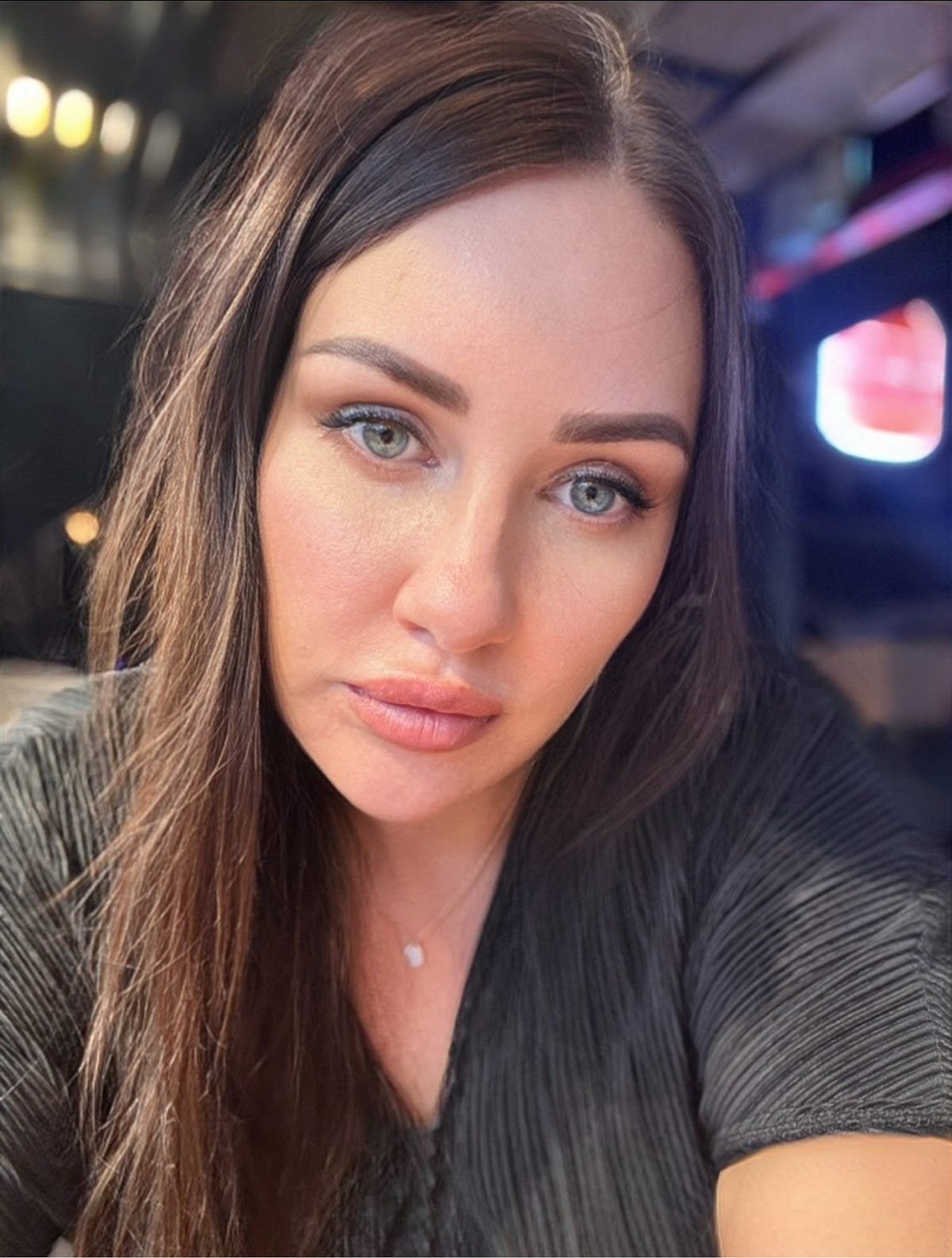
Everything began in May 2025.
Before a planned trip to Turkey, popular blogger Lidiia Novikova decided to go through her usual cosmetic procedures – including Botox injections for forehead mimic wrinkles and botulinum therapy for her underarms to treat hyperhidrosis (excessive sweating).
Just a few days before the procedure, Lidiia had finished a course of antibiotics after pneumonia. At that moment, she felt she had recovered enough and decided there was no danger in doing her routine injections.
Later she would learn how dangerous this decision was – injecting botulinum toxin right after an inflammatory illness carries extremely high risks.
There were ten days left before her flight. The first few days after the injections were completely normal – no pain, no complications. But on day five, Lidiia noticed double vision. She assumed it was leftover fatigue from the pneumonia.
A day later, a new symptom appeared – severe weakness throughout her body. It felt as though her muscles were simply refusing to work. Each day became harder: her arms would get tired after the smallest movements, and even minor tasks required enormous effort.
She began going from doctor to doctor. All of them repeated the same thing: post-pneumonia weakness, you need time to recover.
She never even considered the possibility that the Botox might be the cause.
With just a few days left before the trip, her condition worsened.
“I couldn’t even hold a cup,” Lidiia recalls. “I packed my luggage in tiny parts, with long breaks. At that point, I didn’t care about the vacation – I just wanted to make it through the day.”
The flight to Turkey went smoothly, but within the first days of her vacation, Lidiia felt awful. Despite the sun, walks, and the relaxed holiday rhythm, the exhaustion only intensified. Her body refused to recover – every day became heavier than the last.
On the third or fourth day, she couldn’t hold objects anymore.
“That’s when I got scared. My muscles were just ‘shutting down’. Every movement felt like torture. I knew this wasn’t simple fatigue anymore.”
A few days later, during a walk in the city, her condition suddenly worsened dramatically.
“I tried to take a breath – and I couldn’t. It felt like my chest was paralyzed. I thought I was dying.”
The sensation was horrifying. Breathing became extremely difficult – and at times it felt like air stopped entering her lungs completely.
Desperate, she had to get on all fours because in that position it was slightly easier to breathe.
“At first, I thought it was a complication after pneumonia. Then I thought it was asthma. Everything sounded like a death sentence.”
Her vacation ended there. From that moment – no beach, no rest, just hospitals.
She visited numerous pulmonologists, went through tests, scans, bloodwork, CT, MRI.
All results came back normal: lungs were clean, with only minor traces of recent pneumonia.
Her heart was normal – only slight tachycardia.
No doctor could explain what was happening.
“I left each appointment with the conclusion ‘everything is normal’, but I knew – nothing was normal. Every day I was getting worse.”
To be safe, doctors prescribed antibiotics “just in case.”
On the second day of the antibiotics, she suddenly felt a little better.
“I thought: okay, it really is a complication after pneumonia.”
For 24 hours, she felt almost like a normal person again.
But the next day everything became worse – far worse than before.
They rushed to the hospital again.
There she was prescribed hormonal inhalers – the same ones used by people with asthma.
They helped, and Lidiia calmed down.
“So it’s asthma,” she thought.
But another week later the symptoms worsened again.
The inhalers stopped working.
She doubled the dose – nothing changed.
During this period she searched endlessly for explanations.
She read forums, medical articles, patient stories.
And suddenly a thought struck her:
What if it’s the Botox?
She scheduled online consultations with neurologists – all of them insisted that this was impossible.
So she began investigating her own symptoms.
She compared cases, read medical research, reviewed similar patient stories.
And she realized:
Everything happening to her matched the symptoms of myasthenia gravis.
Myasthenia is an autoimmune, incurable disease where the immune system attacks the connection between nerves and muscles, causing severe weakness and fatigue.
Exactly what Lidiia was experiencing.
Could Botox trigger the condition?
According to medical studies, botulinum toxin injections can become a trigger in people with predisposition.
Botox affects neuromuscular transmission – and if the body already has latent vulnerability, it can start a chain reaction.
“After my condition worsened, I began searching for answers,” Lidiia recalls. “I read medical publications, stories of other women with similar symptoms. Some later received diagnoses of myasthenia.”
One woman with a nearly identical experience even became her friend.
“Everything happened to her exactly like it happened to me.
And her symptoms also started after Botox.
She recommended a neurologist in Moscow who specializes in myasthenia.
I booked an appointment the moment I returned home,” Lidiia says.
When she returned home, she decided to first rule out asthma completely. She felt she was close to understanding the cause.
But the appointment with the neurologist was only available in two weeks – and these two weeks became the most torturous period of her life.
Her condition remained consistently terrible: not worse, but never better.
The episodes came in waves – little relief, then severe breathing difficulties again.
Her respiratory system suffered the most – and this was the scariest part.
After weeks of unsuccessful attempts to understand her condition, Lidiia fell into deep depression.
“How am I supposed to live like this?” she thought.
“I have four children, a job, a home – and no understanding of what will happen to me.”
When the long-awaited appointment finally arrived, she felt a small bit of hope.
Her episodes still occurred, but not as severely.
It seemed that as the Botox slowly lost its effect, the symptoms also seemed to weaken – for the first time in months, she felt the slightest relief.
At the appointment, the neurologist performed examinations.
Some results supported the idea of myasthenia.
But there was one problem – the Botox.
Botulinum toxin can cause neuromuscular transmission disorders that resemble myasthenia.
This condition is classified as a myasthenic syndrome.
According to the doctor, her immune system was weakened after pneumonia and antibiotics.
In this state, the botulinum toxin spread through her body rather than remaining localized.
Yes, this happens – and nobody is fully protected from such reactions.
A clinical conclusion was made: Botulism (A05.1).
But to completely rule out true myasthenia, she needed to wait at least six months.
If the symptoms did not fully resolve – it would be a different diagnosis entirely.
“That day, I was the happiest person. Not because the diagnosis was mild, but because it wasn’t myasthenia. The doctor said it would pass. I just needed patience. He prescribed a mild therapy – and I finally began to feel better.”
“If they had diagnosed me properly in Turkey, the treatment would have been much easier. But instead, I suffered for nearly four months. It didn’t pass without consequences – later my therapy included antidepressants and additional medications. Treatment was expensive.”
Her nervous system suffered greatly.
She withdrew from life, stopped leaving the house.
She suffered enormously.
Every night she dreamt she was dying.
She became like a “plant”, as she describes.
She stopped working.
Her children were often hungry.
She had no strength, no interest in anything.
Thoughts of death appeared – as a relief from suffering.
Only three months later did her mental state begin to slowly return to normal.
She had always been a lively person – and now she was learning to be alive again.
By November her body and muscles fully recovered, and her breathing returned almost to normal – with only mild episodes that she barely noticed.
She even started exercising again.
In total – six months of pain, fear, and enormous expenses.
But through all of it, she finally understood what it truly means – simply to live.
“I just want to fully recover.
I want to forget what it feels like when you cannot breathe.
And I hope I will never experience it again.”