

Greek Salad Dressing | Skinnytaste
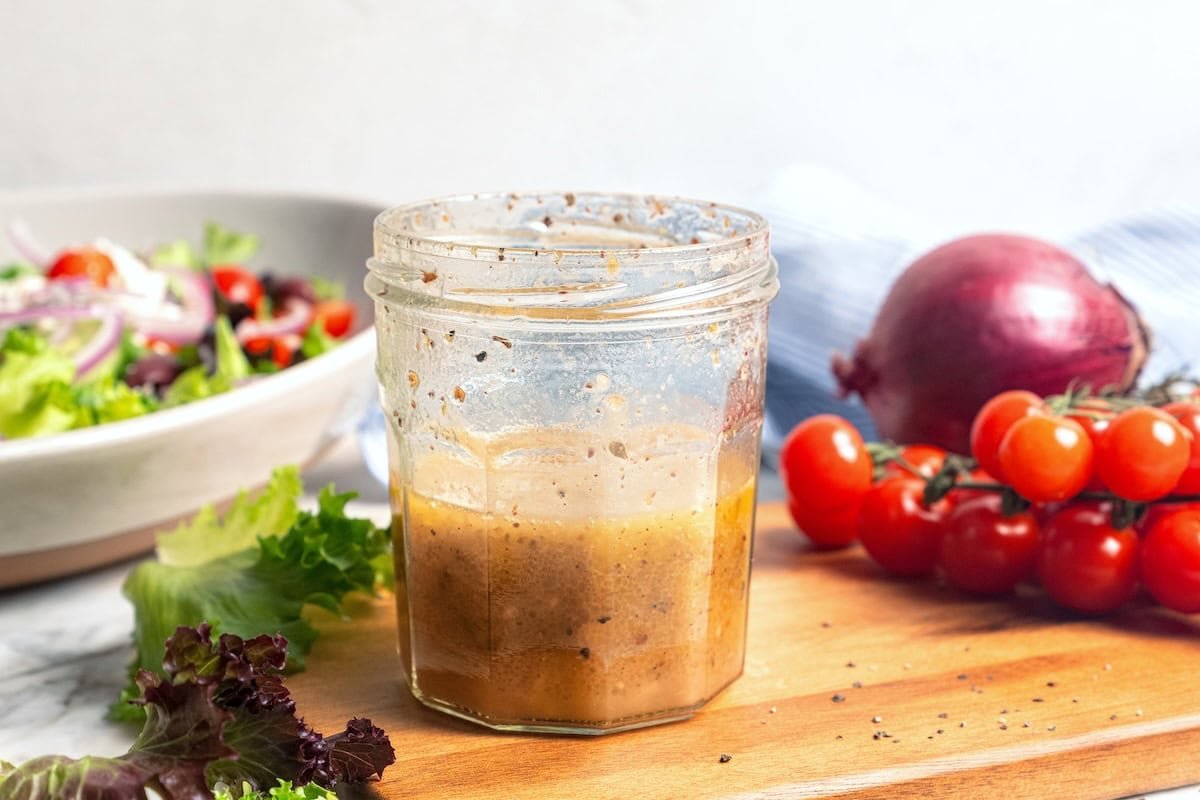

My homemade Greek salad dressing recipe is simple, fresh, and brightly tangy, but I add an optional secret ingredient that makes it next-level delicious. Scale it up for a party, or scale it down to make a salad for one!
Homemade Greek Dressing Recipe
There’s absolutely no reason to buy Greek salad dressing at the grocery store when the homemade version is made with pantry staples, comes together in minutes, and tastes far better than store-bought. This dressing has the bright, tangy, garlicky, oregano-forward flavor of a classic Greek dressing, but then there’s that secret ingredient: sumac. It’s the red powder you often see sprinkled on hummus at Mediterranean restaurants. The sumac is optional, but I love the subtle lemony brightness it adds without the acidity of using lemon juice. (For another zippy vinegar-based salad dressing, try this summery Red Wine Tomato Vinaigrette.)
Ingredients You’ll Need
Below are the ingredients for this homemade Greek salad dressing. See the recipe card for exact measurements.
- Extra-virgin olive oil: Use a good quality oil. This is the kind of recipe where it will really shine.
- Red wine vinegar gives the dressing its classic tangy flavor.
- Garlic: Mince this finely or even grate it on a microplane so it’s evenly distributed in the dressing.
- Dried oregano is essential for that Greek flavor.
- Dijon mustard helps with emulsification and it also adds some depth.
- Ground sumac (optional) for a subtle lemony brightness without extra acidity.
- Kosher salt and freshly ground black pepper to bring everything together.
How to Make Greek Salad Dressing
This is the best Greek salad dressing and it comes together in just a few minutes.
- Combine the ingredients: Add all of the ingredients to a small jar (if you want to shake the dressing) or bowl.
- Whisk or shake: Whisk until fully combined, or secure the lid on the jar and shake well until emulsified.
My Favorite Ways to Use Greek Dressing
A Greek salad is the most obvious choice, but there are a lot of other things you can do with this dressing.
- Make a Greek-ish salad (as pictured) with romaine, cucumbers, tomatoes, olives, sliced red onions, and feta. While I love traditional Greek salads without lettuce, this is how I do a Greek salad for lunch—it’s lighter on the feta and olives, and since I don’t usually have green peppers on hand, I skip them.
- Use it as a marinade for chicken. I think it would be excellent with shrimp too!
- Toss baby potatoes in the dressing before roasting them for Greek-inspired roasted potatoes.
- Use it as a dressing for grain, bean, or pasta salads. It’s really delicious if you let it soak into cooked quinoa or toss it with chickpeas, diced cucumbers, halved cherry tomatoes, and crumbled feta for a Greek chickpea salad.
Storage Tips
Store your homemade Greek salad dressing in a sealed jar for up to 1 week. Shake well before using.
More Homemade Dressings You’ll Love
Yield: servings (1 1/2 tablespoons each)
Last Step:
Please leave a rating and comment letting us know how you liked this recipe! This helps our business to thrive and continue providing free, high-quality recipes for you.
Note: This is easily enough dressing for 2 nights for a side salad for my family of 3 or 4. Just toss it with your greens right before serving.
Calories: 109 kcal, Carbohydrates: 0.3 g, Protein: 0.1 g, Fat: 12 g, Saturated Fat: 2 g, Polyunsaturated Fat: 1 g, Monounsaturated Fat: 9 g, Sodium: 103 mg, Potassium: 9 mg, Fiber: 0.1 g, Sugar: 0.02 g, Vitamin A: 3 IU, Vitamin C: 0.2 mg, Calcium: 5 mg, Iron: 0.2 mg